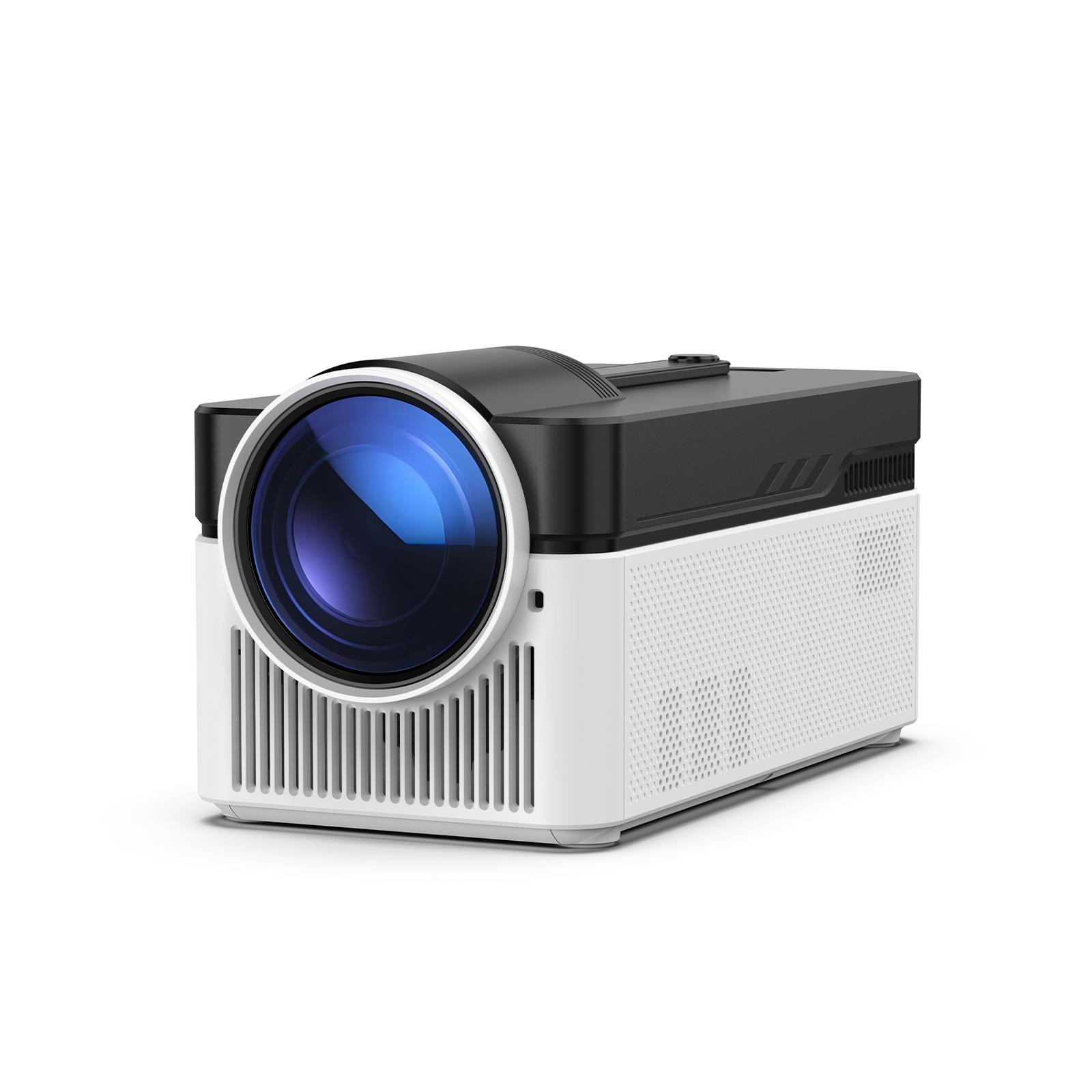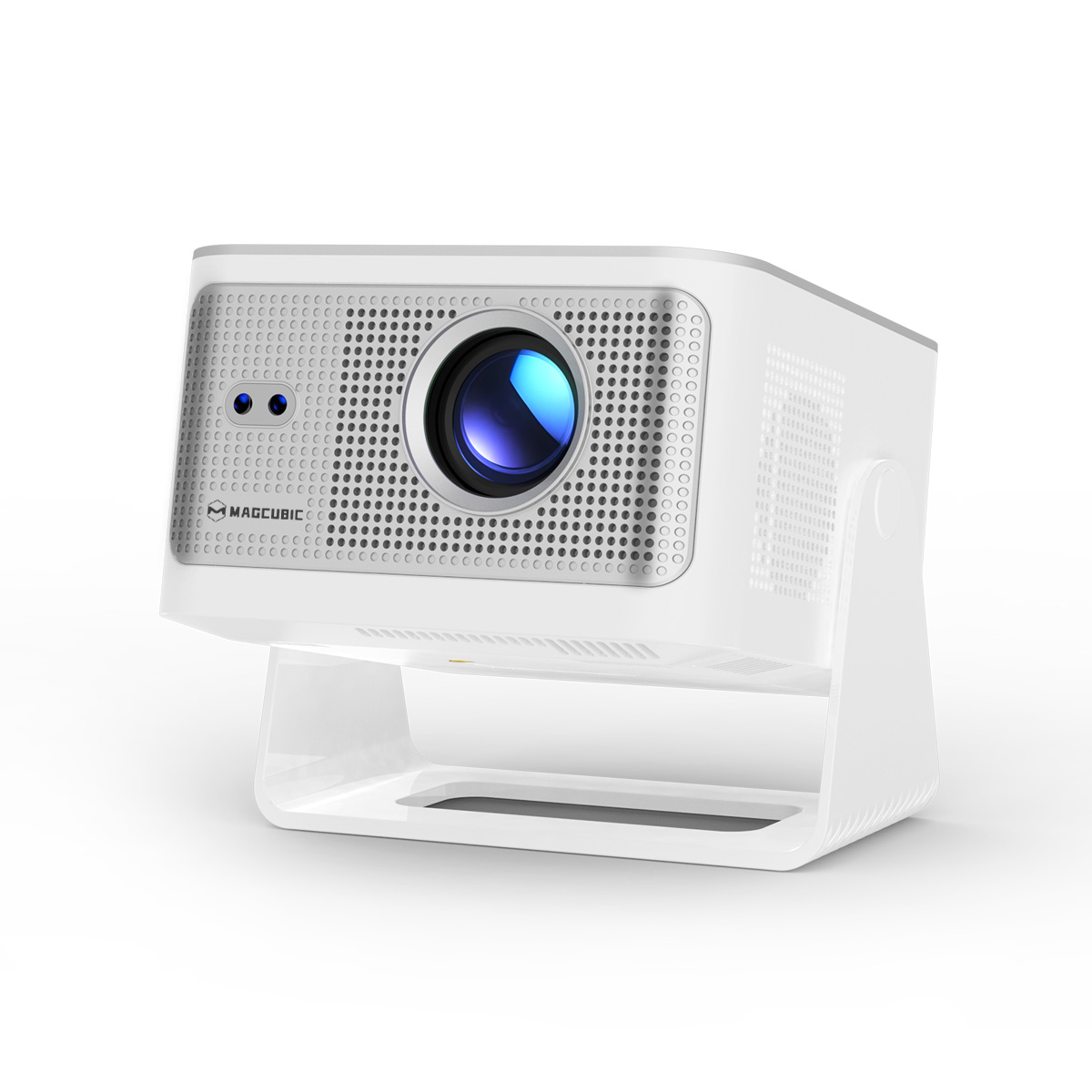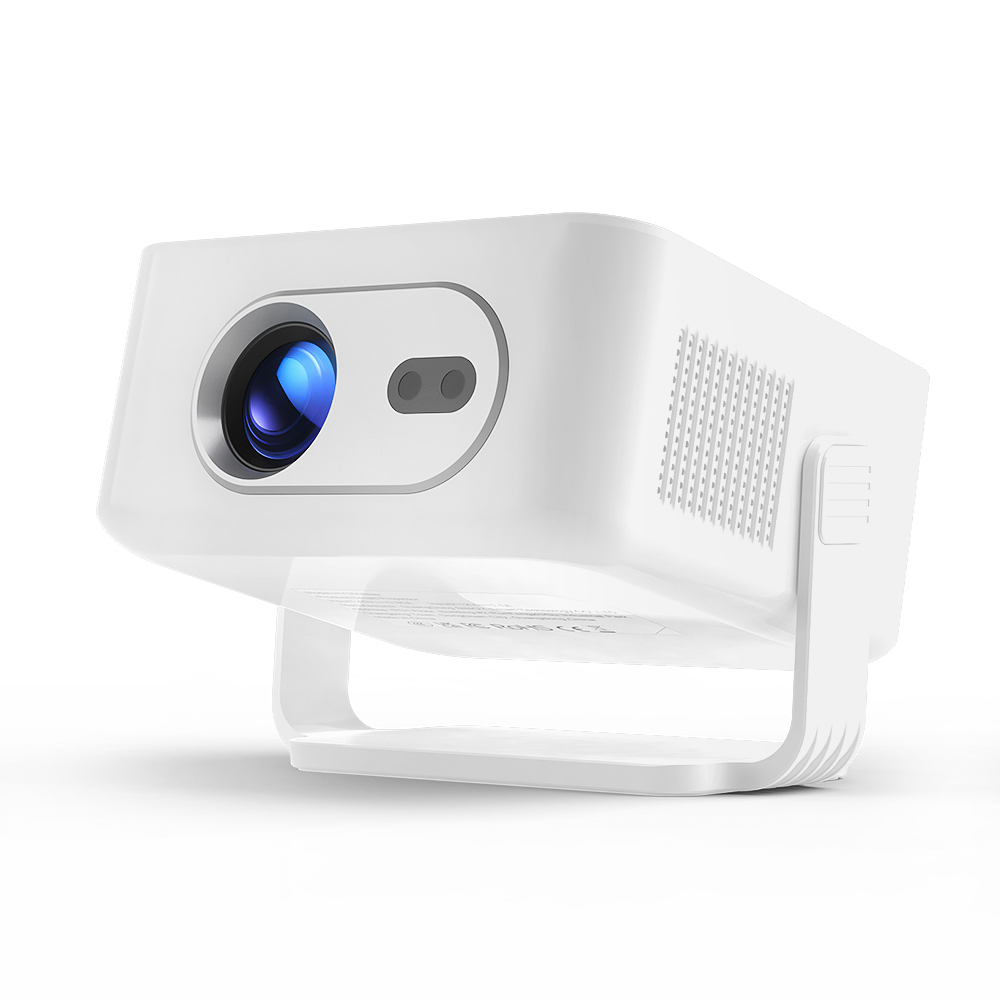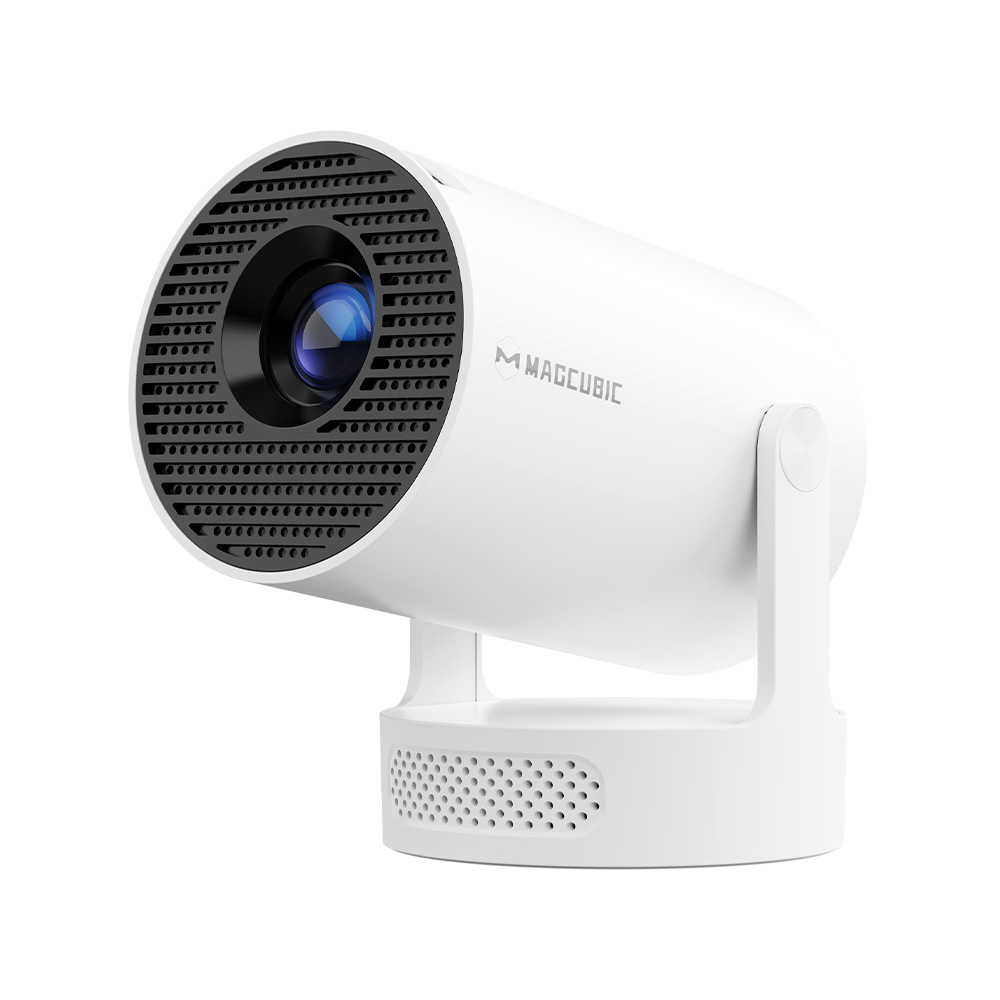
In our daily lives, "Autofocus" is a very familiar feature. For instance, when we take a photo with a smartphone, the lens automatically locks onto the subject and quickly adjusts the focus; during video calls, the camera continuously keeps the picture sharp; even in dashcams and security cameras, the system automatically adjusts the focus based on distance or visual changes to ensure images remain crisp. These seemingly common features inherently rely on the rapid development and maturity of autofocus technology. Today, this capability is also being widely adopted in a larger type of display equipment: projectors.
Compared to smartphones or video cameras, projectors operate in much more complex environments. Their projection distances vary, wall materials differ, and ambient light changes frequently—creating a higher requirement for stable, clear imaging. Consequently, autofocus technology has gradually become one of the core capabilities of modern projectors.
So, what exactly does Autofocus mean in the context of a projector? How does it work? This article will comprehensively analyze this technology from its working principles and application scenarios to current industry trends.
1. What is Projector Autofocus?
Projector autofocus is essentially an intelligent imaging system driven by the synergy of distance sensing, image analysis, and mechanical adjustment. Its core goal is to automatically keep the projected image at its sharpest across different distances and environmental conditions, eliminating the need for users to manually adjust the lens.
Technically speaking, the autofocus process typically begins by measuring the projection distance. The system captures spatial data between the projector and the projection surface using built-in sensors. Concurrently, some systems analyze visual characteristics of the image itself—such as edge sharpness and contrast variations—to determine whether the current image is at its optimal focal point.
Once the initial data is gathered, the projector's internal control algorithm processes it to determine the ideal focal position. This calculation involves rule-based algorithms or is assisted by AI models, allowing the system to adapt quickly to complex environments.
Following this, the system drives a micro-motor within the lens assembly to precisely shift the lens elements, bringing the optical image closer to the perfect focus. When the image sharpness reaches a predefined threshold, the system stops adjusting. It then continues to apply subtle compensation tweaks during use to counteract any minor vibrations or position shifts.
Therefore, what the user experiences as "autofocus" is actually a continuous, closed-loop intelligent control process rather than a one-time adjustment.
.png)
2. Main Technical Solutions for Autofocus
Currently, there are three mainstream autofocus solutions used in the industry:
(1) ToF (Time of Flight) Autofocus
ToF technology is a sensing method commonly used for distance measurement and spatial awareness. Its fundamental principle is straightforward: the system emits invisible infrared light pulses. When the light hits an object (such as a projector screen or a wall), it bounces back. The sensor calculates the time it takes for the light to travel to the target and back, precisely determining the actual distance between the device and the projection surface.
In a projector autofocus system, whenever the device powers on or changes position, the ToF sensor immediately captures the distance data and sends it to the main controller. The system then combines this with its lens focal model to quickly calculate the most suitable focus position and drives the lens assembly to complete the adjustment.
Because ToF relies on direct physical distance measurement, it does not depend on complex image analysis. Its primary advantages include:
- Fast response times allow for rapid focusing right at startup.
- High measurement accuracy, making it suitable for a wide range of projection distances.
- Low dependence on ambient light and image content, adapting well to complex environments.
(2) Contrast Detection Autofocus
Contrast Detection Autofocus is a method based on image clarity feedback. Its core principle relies on continuously micro-adjusting the lens position and analyzing image sharpness in real time to locate the best focal point.
Instead of relying on external distance sensors, the projector works through a trial-and-error focusing process. The system moves the lens assembly back and forth within a specific range, capturing image clarity data at every single position. When the image contrast reaches its highest peak and the edges appear sharpest, the system determines that it has found the optimal focus and stops adjusting.
In projector applications, this approach is commonly used as an image-feedback-based autofocus solution, particularly for products where cost control is crucial or for system architectures that do not rely on complex depth sensors.
Its advantages and disadvantages can be summarized as follows:
- Advantages: Simple hardware structure, lower system cost, mature technology, and easy implementation across different projector lens systems without needing extra sensors.
- Disadvantages: Highly sensitive to changes in ambient light and image content, requires multiple adjustment iterations (leading to slower overall response speeds), and offers lower stability in complex usage scenarios.
(3) AI Autofocus
AI Autofocus is an advanced solution that deeply integrates artificial intelligence algorithms with traditional optical focusing systems. Rather than relying on a single sensor or simple image analysis, AI autofocus synthesizes multidimensional data—such as image features, spatial structures, historical focus results, and the device's current physical orientation—using algorithmic models to predict and calculate the ideal focal point. This creates a smarter, more stable focusing experience.
Additionally, AI algorithms can link directly with Auto Keystone Correction. When the projection angle changes, the system not only adjusts the geometric shape of the image but also simultaneously recalculates the best focal length, ensuring the picture stays sharp and crisp while maintaining the correct proportions.
As a result, AI autofocus offers superior adaptability to various environments, showing excellent stability in complex scenarios such as uneven walls, angled projections, or when using mobile equipment.
Its main advantages include:
- High adaptability to different wall textures and materials (such as plain white walls, screens, or rough surfaces).
- Seamless coordination with auto keystone correction systems for simultaneous optimization of geometry and clarity.
- High stability and consistency under complex lighting or fast-changing environments.
.png)
3. Core Advantages of Autofocus in Projectors
1. Improved Image Stability and Consistency in Clarity
Autofocus realigns the lens focal length in real time based on changes in projection distance or device placement, ensuring the image always stays at peak sharpness. Compared to traditional manual focusing, its benefits include:
- Maintaining consistent image sharpness continuously, rather than as a one-time setup.
- Adapting to shifts in focus caused by minor vibrations or accidental movement of the equipment.
- Delivering uniform imaging performance across various projection distances.
In practical use, this significantly minimizes the frustrating issue of an image shifting between clear and blurry.
2. Reduced Complexity and Lower User Hurdles
For end-users, the greatest benefit of autofocus is that it requires zero operation. Users do not need to understand how lenses work or spend time manually adjusting focus; they simply turn on the device to get a clear picture.
- Automatic focusing upon startup requires no manual setup.
- Lowers the learning curve for non-technical users.
- Minimizes installation and configuration time.
This shifts the projector from a piece of hardware that requires constant calibration into a plug-and-play smart device.
3. Better Multi-Scenario Adaptability
Modern projectors are used in a wide variety of settings, such as home theaters, meeting rooms, and outdoor entertainment. Each scenario demands different focal distances. An autofocus system can quickly switch and recalibrate between these environments, for example:
- Automatically refocusing when moved from the living room to a bedroom.
- Handling distance variations and uneven ground during outdoor use.
- Deploying quickly during business meetings to instantly restore a sharp image.
- This self-adjusting capability vastly improves the flexibility of the projector.
.png)
4. Application Differences in Various Types of Projectors
1. Smart Home Projectors
These focus on a plug-and-play experience, making autofocus a standard baseline feature. In this category, autofocus is usually integrated with Auto Keystone Correction. Users just power on the device, and the system automatically fixes the image geometry and focus, letting them jump straight into watching content.
The new line of Magcubic projectors heavily prioritizes these automated capabilities, featuring autofocus and auto keystone correction across nearly all models. Users do not need to make manual adjustments; whether in a bedroom, living room, or a temporary mobile setup, they can quickly get a clear picture with correct proportions.
2. Business and Conference Projectors
These prioritize quick deployment and stability, requiring precise focus retention even when frequently moved between rooms.
3. High-End Home Theater Projectors
These places greater emphasis on optical precision and pure image quality, demanding ultra-high focusing accuracy.
5. Current Technical Challenges
Even though autofocus technology is quite mature, a few technical bottlenecks remain in the industry:
- Precise focus control is highly difficult to maintain in ultra-short-throw projection.
- Complex ambient lighting can sometimes cause the system to miscalculate.
- Mechanical lens structures face long-term wear and stability challenges.
- Synergy and optimization between AI algorithms and hardware still need improvement.
Magcubic projectors lean toward a Contrast Detection Autofocus solution, continuously adjusting the lens based on image clarity feedback and pairing it with auto keystone correction for rapid image optimization. Addressing and refining these specific areas remains a core focus of our ongoing product development.
6. Conclusion
Projector autofocus technology is actively transitioning from a helpful secondary feature into a core component of the user experience. It not only makes devices far easier to use but also drives the entire projector industry toward a smarter future. Moving forward, as AI and multi-sensor fusion technologies advance, autofocus will become even faster and more precise, embedding itself deeper into the smart display ecosystem.